Bulguksa Temple – Gyeongju’s Timeless Buddhist Masterpiece of Ancient Architecture, Sacred Heritage, and UNESCO Cultural Beauty


Introduction
Bulguksa Temple is one of Korea’s most important Buddhist temples, located in Gyeongju, the ancient capital of the Silla Kingdom. It is recognized as a UNESCO World Heritage Site for its outstanding cultural and architectural value.
The temple represents harmony between nature, religion, and classical Korean design.
The Golden Age Legacy of the Silla Kingdom


A Temple Born in Korea’s Ancient Capital
Bulguksa Temple was originally built in 528 AD during the Silla Dynasty.
Key highlights:
- Built under King Beopheung’s reign
- Center of Buddhist culture in ancient Korea
- Reconstructed multiple times over centuries
- Symbol of national spiritual heritage
- UNESCO World Heritage designation
It reflects the golden age of Korean Buddhism.
The Iconic Stone Pagodas: Dabotap and Seokgatap


Perfect Balance of Artistic Contrast
Bulguksa Temple is home to two world-famous pagodas.
Key features:
- Dabotap: highly detailed and ornamental design
- Seokgatap: simple and symmetrical structure
- Symbol of duality in Buddhist philosophy
- National treasures of Korea
- Located in the temple courtyard
They represent harmony between complexity and simplicity.
Sacred Wooden Architecture and Temple Halls


A Masterpiece of Traditional Korean Design
Bulguksa Temple showcases classical wooden architecture.
Key highlights:
- Elegant wooden temple halls
- Colorful dancheong decorations
- Buddhist statues and prayer halls
- Harmonious mountain setting
- Carefully preserved heritage structures
It is one of Korea’s finest architectural works.
Stone Bridges and Symbolic Pathways


The Path Between Earth and Enlightenment
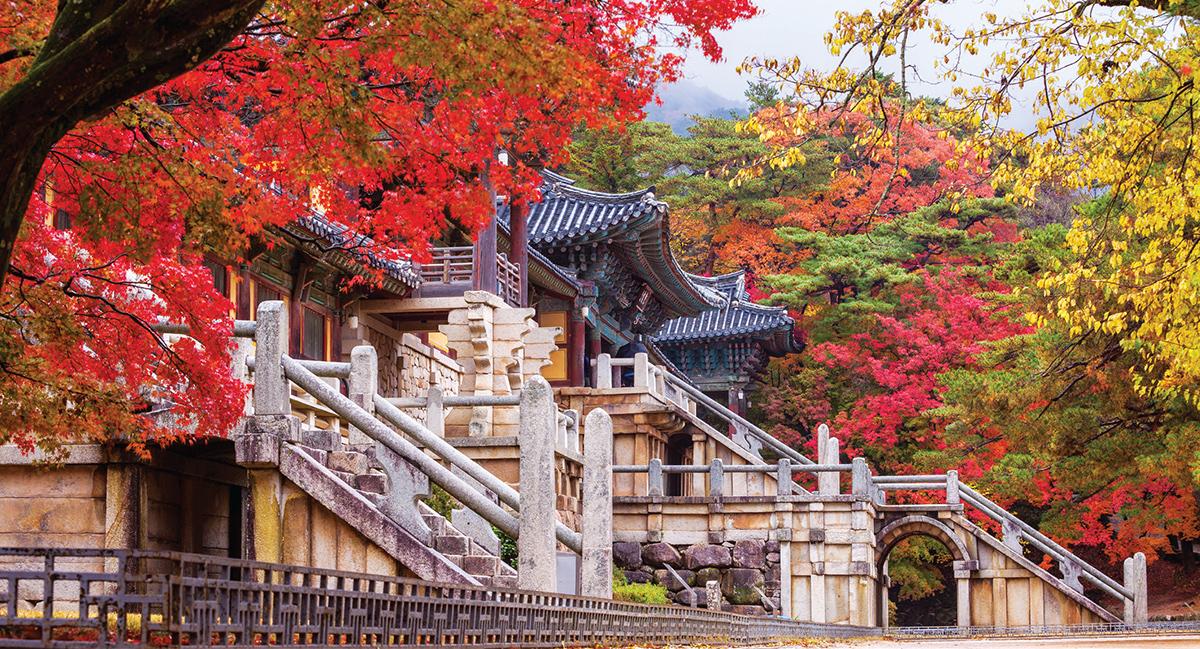
Bulguksa Temple features symbolic stone stairways and bridges.
Key features:
- Cheongungyo and Baegungyo bridges
- Represents spiritual journey stages
- Stone steps leading to sacred halls
- Surrounded by seasonal foliage
- Architectural symbolism of enlightenment
Each step reflects Buddhist philosophy.
Seasonal Beauty Across Four Distinct Landscapes


A Temple That Changes with Nature
Bulguksa Temple transforms beautifully throughout the year.
Spring: cherry blossoms and fresh greenery
Summer: lush forest surroundings
Autumn: vibrant red and orange leaves
Winter: serene snow-covered roofs
It is one of Korea’s most photogenic temples.
Buddhist Culture and Living Spiritual Tradition


A Living Center of Faith and Practice
Bulguksa Temple remains an active religious site.
Key highlights:
- Daily Buddhist rituals
- Monks chanting ceremonies
- Meditation spaces for visitors
- Spiritual retreats and programs
- Cultural preservation of Buddhism
It is both sacred and welcoming.
Why Bulguksa Temple Is Korea’s Cultural Treasure


A Perfect Harmony of History, Faith, and Nature
Bulguksa Temple stands as one of Korea’s most important cultural landmarks, blending ancient Silla heritage, refined architecture, Buddhist philosophy, and natural mountain beauty into a timeless destination.