Source: s.yimg.com
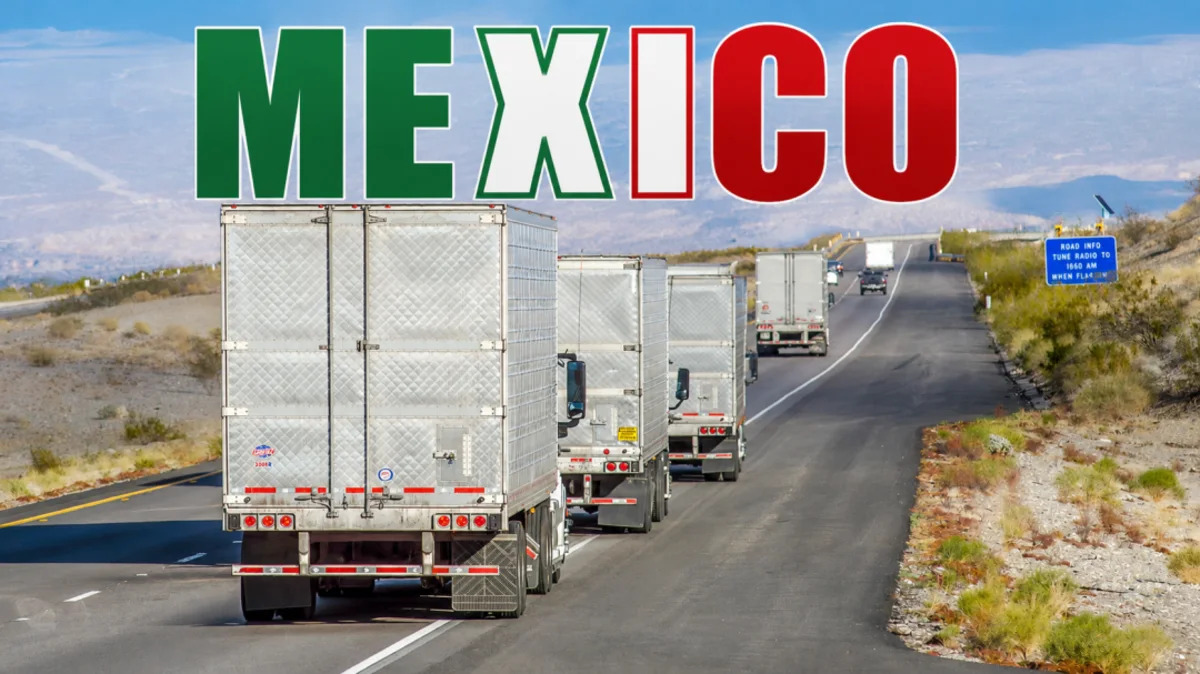
Mexico’s export machine has accelerated in recent months, despite ongoing uncertainty surrounding tariffs, immigration enforcement, and shifting automotive production, according to a report from logistics giant C.H. Robinson.
The report found that Mexican exports rose 34.4% year over year in June, marking the fifth consecutive month of double-digit growth and pushing first-half export growth to 24.6%. Manufacturing exports increased 35.3% in June, led by electrical and electronic equipment as well as food and beverage shipments.
C.H. Robinson, a global third-party logistics company, provides freight transportation and supply chain management services. The company’s analysts noted that the U.S. continues to dominate Mexico’s export market, absorbing roughly 84% of the country’s non-oil exports during the first six months of 2026. Non-oil exports to the U.S. climbed 35.8% in June, compared to 25% growth for exports to the rest of the world.
For trucking companies operating between the two countries, the export surge is translating into continued demand for northbound freight capacity. ‘Northbound lanes out of the Coahuila and Nuevo León corridors continue to present higher load-to-truck ratios compared to southbound, keeping carriers selective and holding rates firm,’ C.H. Robinson analysts wrote.
However, demand for northbound capacity remains strong, volumes in the top international truck gateway of Laredo, Texas, have cooled in August, down 6.7% week over week. Laredo’s truckload rejection index (STRI.LRD) has also decreased to 6.69%, indicating capacity is loosening over the last seven days, according to SONAR data.
Driver shortages and visa enforcement are constraining capacity in the US-Mexico freight market. Stricter enforcement of B-1 visas and English-language requirements is reducing the number of Mexican drivers willing or able to perform cross-border runs into the U.S. Increased scrutiny of shipping documentation, cargo values, weight declarations, and cargo securement is also slowing operations and making carriers more selective about the freight they accept.
Because roughly 81% of Mexico’s land freight moves by truck, those constraints are having an outsized impact on cross-border supply chains, C.H. Robinson said. ‘Carriers are willing to offer attractive rates and allocate capacity to shippers who make operations and compliance easy, rather than just going with the highest bidder,’ the report stated.
The automotive sector, long considered the backbone of U.S.-Mexico freight flows, is showing signs of moderation. Light-vehicle production in Mexico was essentially flat during the first half of 2026, declining 0.4%, while exports rose just 1.4%. Heavy-duty truck production and exports both fell by double digits.
C.H. Robinson noted that some manufacturers are adjusting production strategies amid tariff uncertainty, citing Toyota’s plan to shift Tacoma pickup production from Tijuana, Mexico, to San Antonio, Texas, once its expansion project is completed. At the same time, technology-related freight is emerging as a major growth driver.
Mexico remains the top U.S. trading partner, accounting for nearly 17% of U.S. imports, and computing equipment has now surpassed automotive products as Mexico’s largest export category to the U.S. Intermediate imports signal continued freight growth. Imports of intermediate goods increased 30.9% year over year in June and now account for roughly 80% of Mexico’s total imports.
Because those materials are used to manufacture future exports, C.H. Robinson said the trend suggests export growth could continue through the remainder of 2026. Manzanillo congestion remains a concern. The report also highlighted growing congestion at Mexico’s Port of Manzanillo, a Pacific Coast port and the country’s busiest container gateway.
Road construction on the Colima-Manzanillo highway, combined with capacity constraints inside the port, is creating long truck queues and unpredictable drayage transit times, C.H. Robinson said. Container volumes through Mexican ports increased 3.1% during the first half of the year, with Manzanillo accounting for 43% of the country’s total container traffic. C.H. Robinson advised shippers to build additional buffer time into supply chains or consider alternative gateways such as Lázaro Cárdenas.
Online Assistant