Jantar Mantar – Jaipur’s Astonishing Astronomical Wonder That Was Centuries Ahead of Its Time


Introduction
Jantar Mantar is one of the world’s most remarkable astronomical observatories and a masterpiece of scientific innovation. Built in the 18th century by Maharaja Sawai Jai Singh II, this UNESCO World Heritage Site features a collection of enormous stone instruments designed to observe celestial bodies, measure time, and calculate astronomical events with impressive precision.
Combining science, architecture, and history, Jantar Mantar remains one of Jaipur’s most fascinating attractions.
Discovering a Visionary Scientific Legacy


A King Passionate About Astronomy
The observatory was created to advance astronomical knowledge.
Key highlights:
- Commissioned by Maharaja Sawai Jai Singh II
- Completed in the 18th century
- Designed for precise celestial observations
- Inspired by global astronomical studies
- Important center for scientific research
It reflects India’s rich tradition of astronomy.
Admiring the Giant Stone Instruments


Engineering on a Monumental Scale
The instruments are both functional and visually stunning.
Key highlights:
- Massive geometric structures
- Built from stone and marble
- Accurate astronomical measurements
- Unique architectural forms
- Exceptional craftsmanship
Each instrument served a specific scientific purpose.
Exploring the Famous Samrat Yantra


The World’s Largest Stone Sundial
The Samrat Yantra is the observatory’s most iconic structure.
Key highlights:
- Measures time with remarkable accuracy
- Towering triangular design
- Massive shadow-casting structure
- Scientific precision
- Symbol of Jantar Mantar
It remains one of the largest sundials ever built.
Understanding Ancient Astronomical Techniques


Science Before Modern Technology
The observatory demonstrates how astronomers worked centuries ago.
Key highlights:
- Tracking planetary movements
- Predicting eclipses
- Measuring celestial coordinates
- Calculating local time
- Observing seasonal changes
Its methods were remarkably advanced for the era.
Appreciating the Geometric Architecture


Where Mathematics Meets Design
The observatory’s appearance is as impressive as its function.
Key highlights:
- Symmetrical layouts
- Geometric precision
- Monumental forms
- Mathematical elegance
- Photogenic structures
The site resembles a giant outdoor sculpture garden.
Learning Through Interactive Exploration


A Fascinating Destination for Curious Minds
Visitors can gain insight into astronomy and history.
Key highlights:
- Educational exhibits
- Guided tours available
- Astronomy demonstrations
- Historical explanations
- Family-friendly learning experience
It makes science accessible and engaging.
Capturing Extraordinary Photographs


A Dream Location for Photography Enthusiasts
The observatory offers countless visual opportunities.
Key highlights:
- Dramatic geometric angles
- Unique shadows and light
- Architectural compositions
- Historic textures
- Wide panoramic views
Every corner creates striking images.
Exploring Nearby Jaipur Attractions


Perfectly Positioned in the Pink City
Jantar Mantar sits near many famous landmarks.
Key highlights:
- Close to City Palace
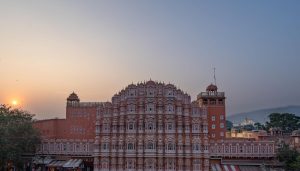
- Near Hawa Mahal
- Located in Jaipur’s historic center
- Easy sightseeing connections
- Rich cultural surroundings
Visitors can explore several attractions in one day.
Visiting During the Best Times of Day


Maximizing Your Experience
Timing can significantly improve your visit.
Key highlights:
- Early mornings offer cooler temperatures
- Better lighting for photography
- Smaller crowds
- Clearer observation conditions
- Comfortable sightseeing
Morning visits are especially rewarding.
Why Jantar Mantar Remains One of India’s Greatest Scientific Monuments


A Timeless Celebration of Knowledge
Jantar Mantar stands as a remarkable reminder of humanity’s desire to understand the universe. Its blend of astronomy, mathematics, architecture, and history continues to inspire visitors from around the world.
For travelers exploring Jaipur, Jantar Mantar offers an unforgettable journey into one of the most advanced scientific achievements of pre-modern India.