Gwangjang Market – Seoul’s Legendary Traditional Market of Street Food, Textiles, and Living Korean Culture


Introduction
Gwangjang Market is one of the oldest and most famous traditional markets in Seoul. Established in 1905, it is widely known for its authentic street food, textile section, and deep-rooted cultural atmosphere.
It is a place where history, daily life, and Korean cuisine come together in one vibrant space.
A Historic Market with Over a Century of Heritage


One of Korea’s Oldest Continuous Markets
Gwangjang Market has preserved its identity for over 100 years.
Key highlights:
- Founded in 1905 during the Joseon period
- One of Seoul’s first permanent markets
- Mix of food and textile commerce
- Strong cultural preservation value
- Still active in daily local trade
It reflects the evolution of modern Korean urban life.
The Legendary Street Food Alley


A Paradise for Korean Food Lovers
Gwangjang Market is world-famous for its food street.
Must-try dishes:
- Bindaetteok (mung bean pancake)
- Mayak gimbap (mini rice rolls)
- Knife-cut noodles (kalguksu)
- Yukhoe (Korean beef tartare)
- Tteokbokki and street snacks
It is one of Seoul’s most authentic culinary experiences.
Textile and Fabric Shopping District


A Hidden World of Korean Fashion Craftsmanship
Gwangjang Market also serves as a major textile hub.
Key features:
- Endless rows of fabric stalls
- Silk, cotton, and traditional materials
- Custom tailoring services
- Wholesale fashion supply center
- Long-standing artisan businesses
It is a key part of Korea’s fashion production ecosystem.
Local Atmosphere and Everyday Life


A True Glimpse into Seoul’s Daily Culture
Gwangjang Market is still deeply local despite its popularity.
Highlights:
- Friendly vendor-customer interactions
- Fast-paced traditional bargaining culture
- Communal eating at food stalls
- Multigenerational family businesses
- Authentic Seoul atmosphere
It remains a living part of the city, not just a tourist attraction.
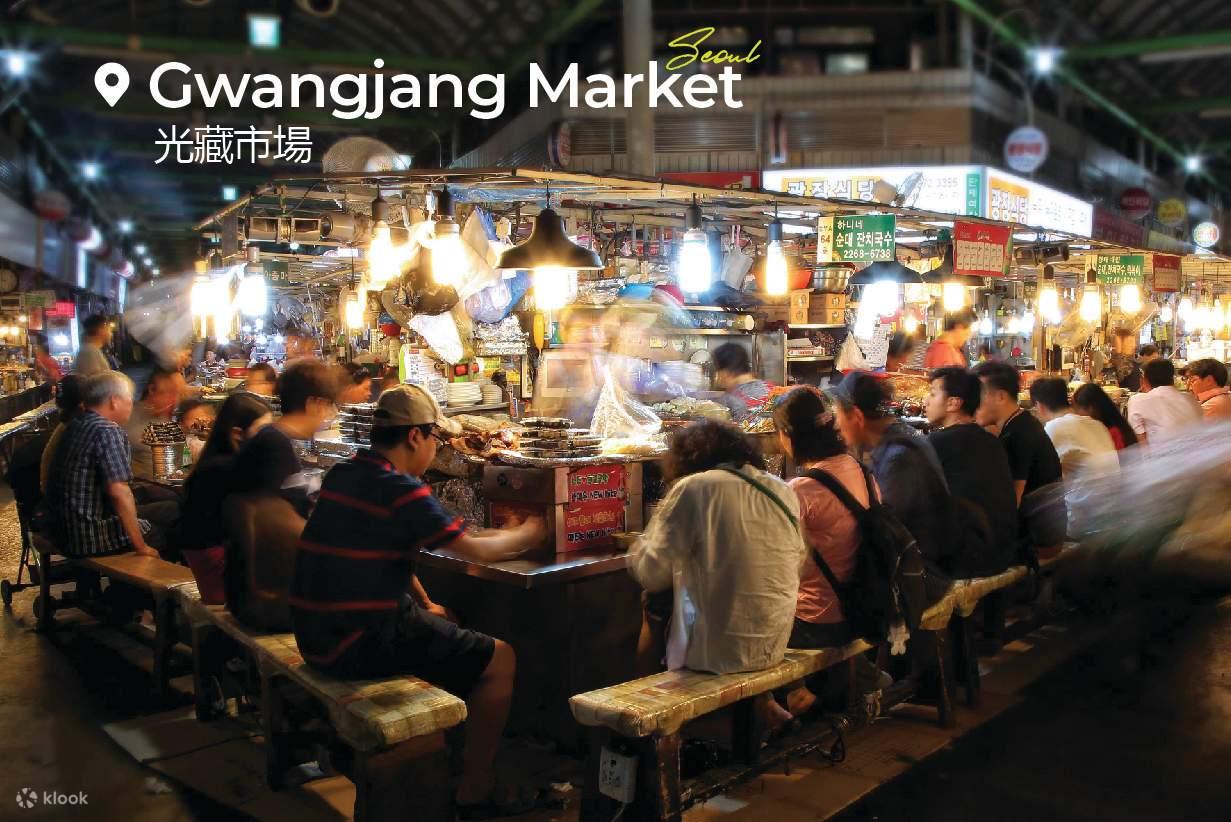
Night Market Energy and Social Dining Culture


A Social Food Experience in Seoul
Gwangjang Market becomes especially lively at night.
Key points:
- Long communal tables for eating
- Warm lighting over food stalls
- Busy evening crowds
- Freshly cooked street food
- Lively social atmosphere
It is one of Seoul’s best nighttime food destinations.
Cultural Importance in Korean Society


A Symbol of Enduring Korean Tradition
Gwangjang Market represents resilience and cultural continuity.
Core values:
- Preservation of traditional markets
- Intergenerational family businesses
- Cultural tourism and education
- Authentic Korean street food heritage
- Urban historical identity
It is a cultural landmark beyond commerce.
Why Gwangjang Market Is a Must-Visit in Seoul


A Perfect Blend of Food, History, and Local Life
Gwangjang Market stands as one of Seoul’s most iconic destinations, combining authentic street food, traditional commerce, and centuries of cultural heritage in a single vibrant location.