Gyeongbokgung Palace – The Majestic Heart of Seoul and the Grand Royal Heritage of the Joseon Dynasty


Introduction
Gyeongbokgung Palace is the largest and most iconic royal palace in South Korea. Built in 1395 during the Joseon Dynasty, it served as the main residence of kings and the center of royal authority.
Today, it stands as a powerful symbol of Korean history, culture, and architectural beauty in the heart of Seoul.
The Grand Entrance of Gwanghwamun Gate


A Symbolic Gateway to Royal Authority
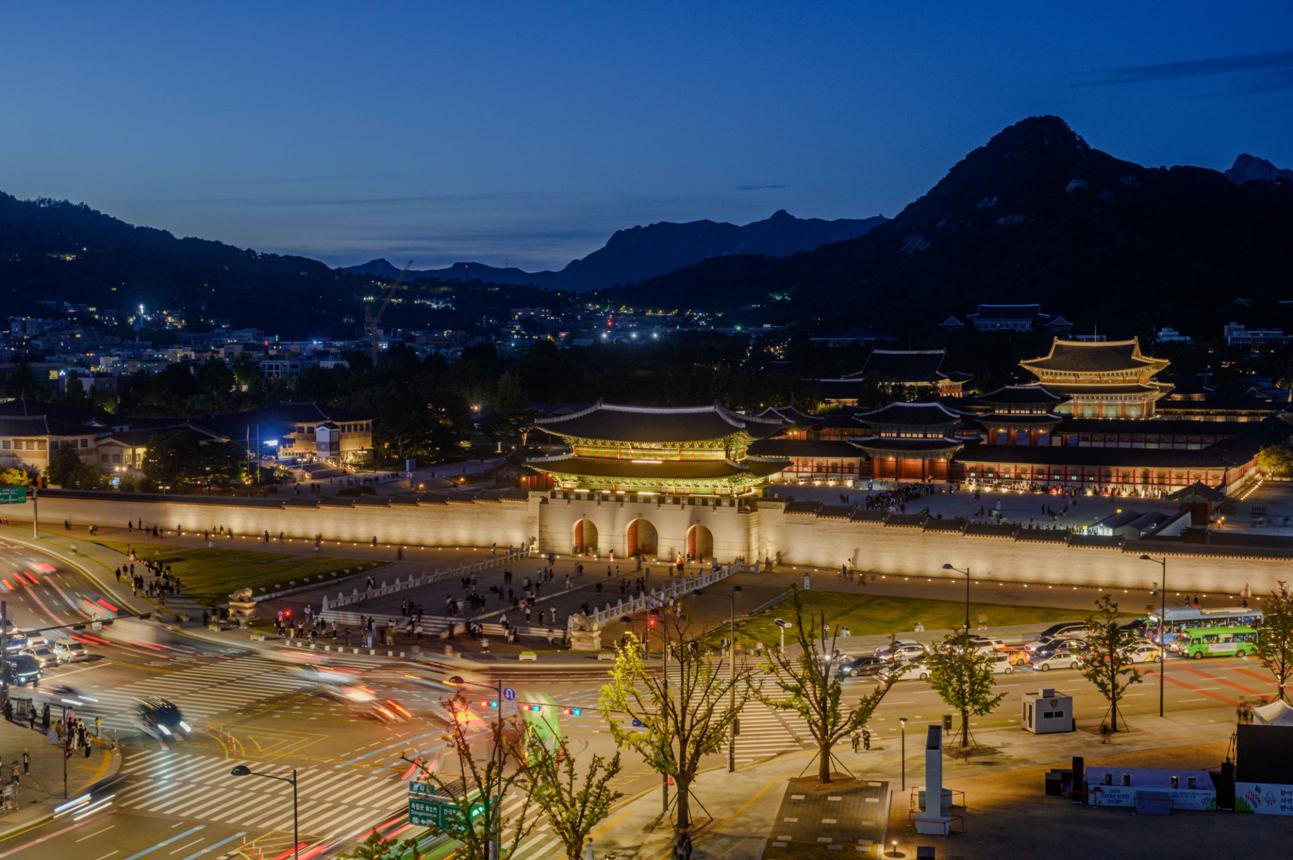
Gyeongbokgung Palace begins at the monumental Gwanghwamun Gate.
Key highlights:
- Main royal entrance of the palace
- Daily guard changing ceremony
- Traditional Joseon architectural design
- Stunning backdrop of Bugaksan Mountain
- One of Seoul’s most photographed landmarks
It represents the formal power of the Joseon dynasty.
Throne Hall – Geunjeongjeon’s Royal Majesty


The Political Center of Joseon Kings
Gyeongbokgung Palace houses Geunjeongjeon, the main throne hall.
Key features:
- Coronations and royal ceremonies held here
- Symmetrical stone courtyard layout
- Dragon motifs symbolizing kingship
- Elevated throne platform
- Strict Confucian architectural order
It reflects authority, discipline, and royal tradition.
Gyeonghoeru Pavilion – The Royal Banquet Island


A Floating Hall of Celebration
Gyeongbokgung Palace features the beautiful Gyeonghoeru Pavilion surrounded by water.
Highlights include:
- Built on an artificial island
- Used for royal banquets and foreign envoys
- Stunning water reflections
- Mountain backdrop scenery
- Seasonal beauty throughout the year
It represents harmony between nature and royalty.
Traditional Korean Architecture and Palace Design


Harmony Through Symmetry and Color
Gyeongbokgung Palace is a masterpiece of traditional Korean architecture.
Key design elements:
- Curved tiled roofs
- Colorful dancheong patterns
- Wooden structural harmony
- Open courtyards and corridors
- Feng shui-inspired layout
It reflects balance between humans and nature.
Changing of the Royal Guard Ceremony


A Living Historical Performance
Gyeongbokgung Palace hosts the famous guard changing ceremony.
Key experiences:
- Daily reenactment of royal traditions
- Colorful Joseon-era uniforms
- Drumming and flag rituals
- Tourist interactive experience
- Cultural preservation performance
It brings history back to life in modern Seoul.
Seasonal Beauty of the Palace Grounds


A Palace That Changes With Nature
Gyeongbokgung Palace transforms beautifully across seasons:
Spring: cherry blossoms and soft colors
Summer: lush green palace gardens
Autumn: red and golden foliage
Winter: snow-covered rooftops and silence
Each season creates a different royal atmosphere.
Cultural Significance in Korean History


The Symbol of Joseon Dynasty Legacy
Gyeongbokgung Palace represents the political and cultural heart of the Joseon era.
Core values:
- Confucian governance principles
- Royal administrative center
- Cultural preservation of Korea
- Historical education site
- National identity symbol
It is deeply embedded in Korean heritage.
Why Gyeongbokgung Palace Is Seoul’s Most Important Landmark


A Perfect Fusion of History, Culture, and Royal Grandeur
Gyeongbokgung Palace stands as the most iconic palace in Korea, combining royal heritage, architectural beauty, and cultural performances into a living historical destination.