Hallasan Mountain – Jeju’s Majestic Volcano Peak of Hiking Adventure, Cloud Seas, Seasonal Beauty, and Korea’s Highest Natural Wonder


Introduction
Hallasan Mountain is the highest mountain in South Korea, standing proudly at the center of Jeju Island. This shield volcano is a UNESCO World Natural Heritage site and one of the country’s most important natural landmarks.
It offers a unique combination of hiking adventure, volcanic geology, and breathtaking seasonal landscapes.
The Giant Volcano That Shapes Jeju Island


A Powerful Natural Formation
Hallasan Mountain was formed through ancient volcanic activity.
Key highlights:
- Shield volcano dominating Jeju Island
- Formed from repeated lava eruptions
- Rich volcanic soil ecosystem
- Central peak rising 1,947 meters
- UNESCO World Natural Heritage site
It is the geological heart of Jeju.
Hiking Trails Leading Through Changing Ecosystems


A Journey Through Multiple Natural Zones
Hallasan Mountain offers well-maintained hiking routes.
Key features:
- Multiple hiking trails (Eorimok, Seongpanak, Gwaneumsa)
- Dense forest at lower elevations
- Alpine plants near summit
- Seasonal landscape changes
- Wooden stairs and eco-friendly paths
Each trail feels like walking through different worlds.
The Legendary Crater Lake at the Summit


A Hidden Lake Inside a Volcano
Hallasan Mountain features Baengnokdam, a crater lake at its peak.
Key highlights:
- Located at 1,950m summit
- Seasonal water and ice variations
- Surrounded by volcanic crater rim
- Often covered in mist or snow
- Sacred and protected natural site
It is one of Korea’s most mystical natural views.
Sea of Clouds and High Altitude Views


A Sky-High Natural Phenomenon
Hallasan Mountain is famous for its cloud scenery.
Key features:
- Sea of clouds below summit
- Golden sunrise above cloud layer
- Floating mountain effect
- Clear winter visibility
- Dreamlike panoramic views
It is one of Korea’s most magical hiking experiences.
Seasonal Transformations of Hallasan


A Mountain That Changes All Year Round
Hallasan Mountain offers distinct beauty across seasons:
Spring: blooming wildflowers and greenery
Summer: dense green forests and cool air
Autumn: golden and red foliage landscapes
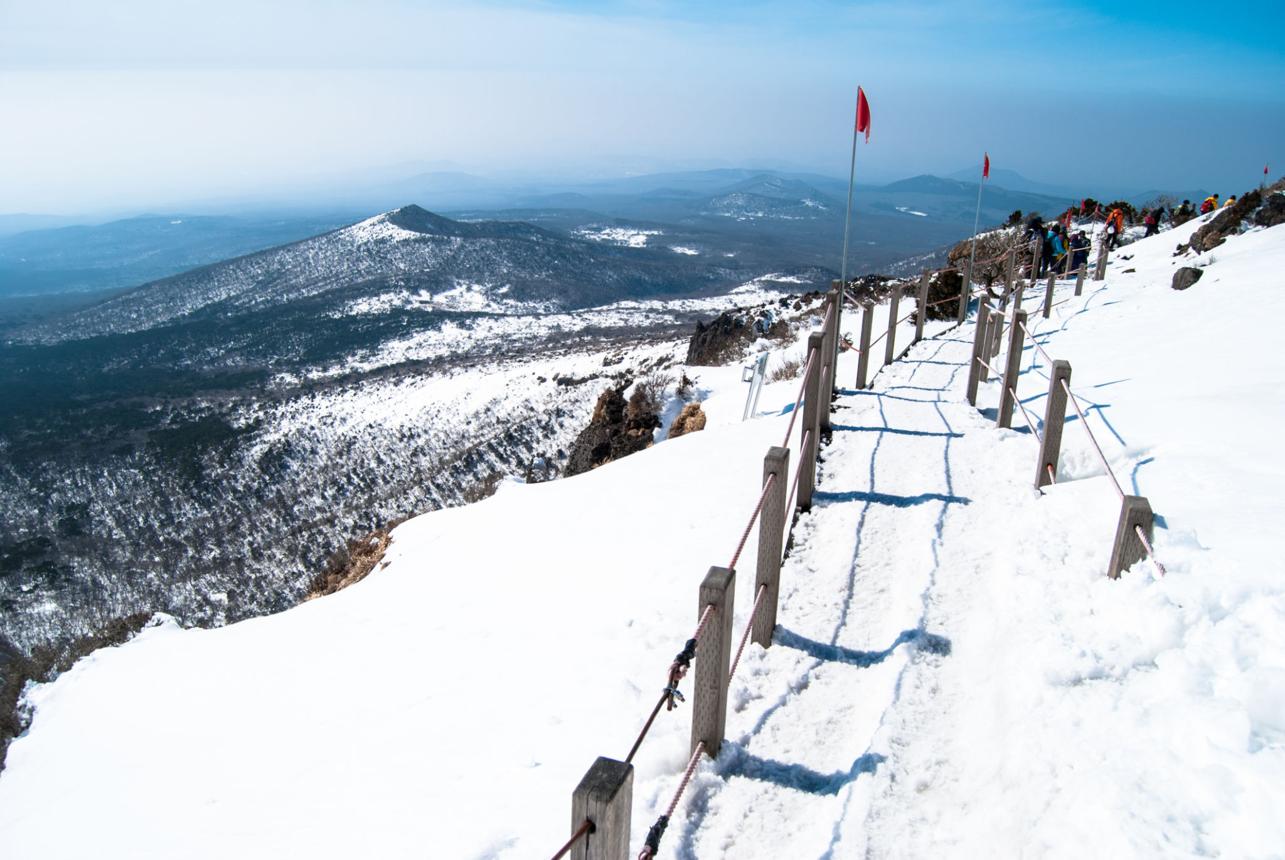
Winter: snowy alpine scenery
Each season creates a new identity for the mountain.
Wildlife and Ecological Diversity


A Living Natural Reserve
Hallasan Mountain supports rich biodiversity.
Key aspects:
- Over 1,800 plant species
- Deer and native wildlife
- Alpine and subtropical zones
- Protected national park ecosystem
- Rare endemic species
It is one of Korea’s most important ecological zones.
Hiking Experience and Visitor Routes


A Well-Organized Hiking Destination
Hallasan Mountain is accessible but challenging.
Key features:
- 4–9 hour round-trip hikes
- Strict entry and timing regulations
- Safety-controlled summit access
- Well-marked trail systems
- Rest stations along routes
It is suitable for serious hiking enthusiasts.
Why Hallasan Is the Soul of Jeju Island


A Perfect Fusion of Volcano Power and Natural Beauty
Hallasan Mountain stands as the highest peak in South Korea, combining volcanic heritage, ecological diversity, seasonal beauty, and unforgettable hiking experiences.