Iran’s President Defends Memorandum of Understanding as Best Path to End Stalled War
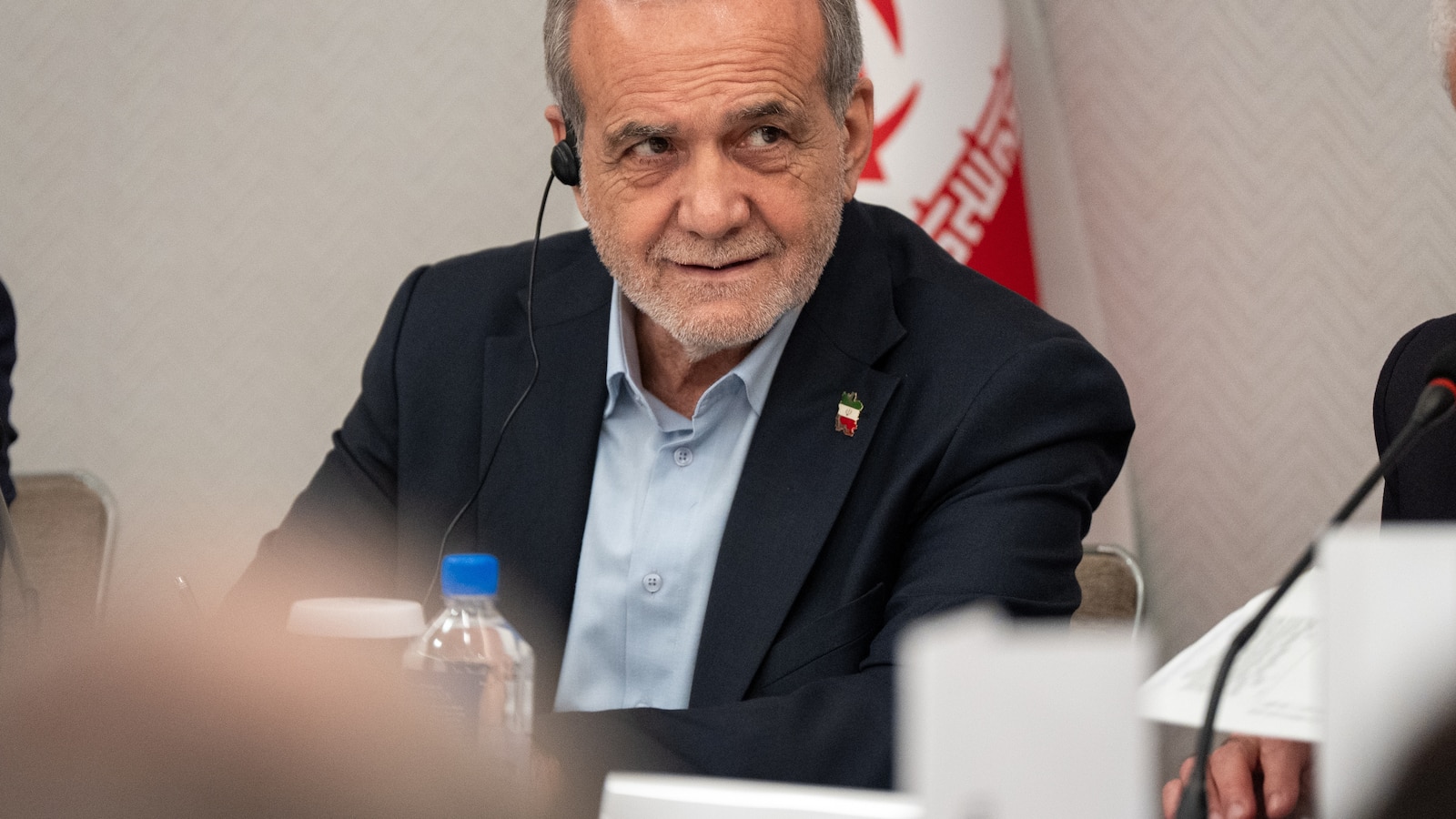
Iran’s President Masoud Pezeshkian has defended a recent memorandum of understanding (MOU) with the United States as the best way to end the ongoing conflict between the two nations. The MOU, signed in June, aimed to establish a 60-day deadline for ending the war and reaching an agreement on Iran’s nuclear program. However, the deadline has since expired, with both sides remaining far apart on key issues, including the reopening of the Strait of Hormuz.
Speaking at a speech published by state-run IRNA, Pezeshkian emphasized that the MOU represented the best possible agreement based on principles of dignity, wisdom, and the national interest. He also stressed that there was no provision in the agreement that amounted to capitulation, and that the supreme leader would set the policies, which would be followed by the government.
The deal has been met with skepticism by many, with some arguing that it does not address the core issues driving the conflict. However, Pezeshkian’s defense of the MOU suggests that the Iranian government remains committed to finding a peaceful resolution to the conflict. The stakes are high, with the Iranian economy suffering under sanctions and a naval blockade that is making it extremely difficult for the country to export oil, its most valuable product.
Pakistan’s Army Chief to Visit Iran
In a separate development, Pakistan’s army chief, Field Marshal Asim Munir, is set to visit Iran on Monday, as part of an official delegation aimed at strengthening bilateral cooperation between the two countries. The visit comes after a phone call between Munir and Iranian Foreign Minister Abbas Araghchi, and is seen as a positive step towards promoting peace and security in the region.
Retaliation Threats from Iran’s Supreme National Security Council
Meanwhile, the hard-line new leader of Iran’s Supreme National Security Council, Mohsen Rezaei, has threatened retaliation against neighboring countries that support US efforts to hurt Iran’s economy. Rezaei warned that if neighbors join the US in its economic war against Iran, they would be considered enemies and would face retaliation, including targeting oil-shipping routes out of the Persian Gulf.
Violence in the West Bank
In a separate incident, a Palestinian man, Saeed Muhammad Ibrahim Rabah, was beaten by an Israeli settler outside his home in the occupied West Bank. Rabah, who lost a leg after being shot by a settler in April 2025, said the attack was an attempt to provoke him and his family to leave their land.
Separately, Israel’s military said they were pursuing the suspect in a stabbing attack that injured a 24-year-old Israeli man in the area of al-Auja, in the eastern West Bank near Jericho. The attack is part of a wider wave of violence in the West Bank, where at least 87 Palestinians have been killed in almost 1,500 attacks by Israeli settlers and soldiers this year.