Luxury Auto CEOs Reveal the Jarring Reality of a K-Shaped Economy
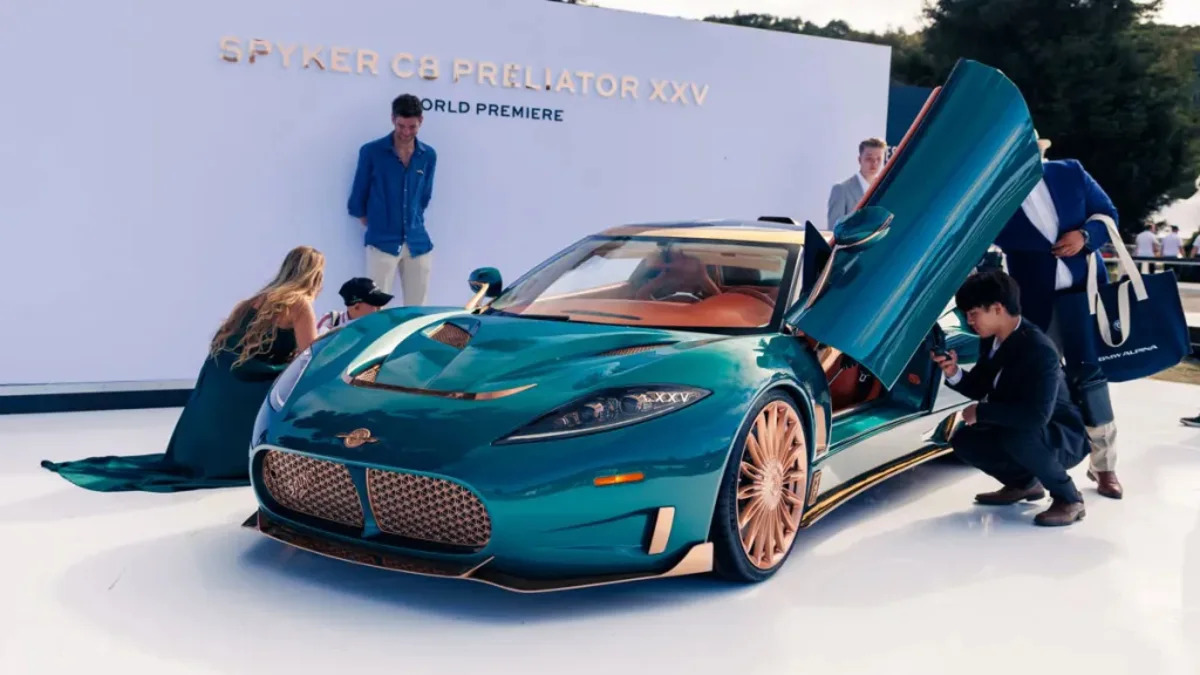
As the world’s top luxury car brands showcased their most extravagant offerings at Monterey Car Week, a stark reality emerged. Behind the scenes, executives from these esteemed manufacturers revealed a K-shaped economy, where the very top of the market is booming, while the tier just below it is growing increasingly nervous.
The Luxury Gold Rush
McKeel Hagerty, CEO of Hagerty, a leading collector-car insurer, has witnessed firsthand the ‘gold rush’ at the top end of the market. He attributes this phenomenon to a surge in liquidity, fueled by large-scale transactions, IPOs, and a hot stock market. However, this increased wealth is largely insulated from the anxiety that pervades the lower rungs of even the modestly wealthy.
Hagerty notes that the number of $100 million car collections built in a matter of months, rather than decades, is unprecedented. This accelerated pace of wealth creation has compressed time itself, allowing the ultra-wealthy to accumulate staggering sums at an unprecedented rate.
A Split in the Market
Frank-Steffen Walliser, CEO of Bentley, paints a more nuanced picture. While the top end of the market is thriving, with ‘proper demand’ and ‘good customers,’ the more regular customers are hesitant. Walliser attributes this to the fact that luxury products, such as handbags, watches, cars, and boats, are largely driven by self-rewarding desires rather than genuine needs.
Adrian Hallmark, CEO of Aston Martin, draws a stark dividing line between the top and middle tiers of the market. He suggests that people at the very top and those at the bottom end of the market are largely insulated from the economic noise. It is the middle tier, however, that is the most susceptible to anxiety, as they purchase the highest volume of cars, albeit not the highest value ones.
Hallmark attributes the psychology of luxury consumption to a quote from Bernard Arnault, the CEO of LVMH. According to Arnault, ‘luxury consumption is merely an indicator of people’s confidence in their future.’ If individuals believe they will be wealthier in the next three to ten years, they will invest in luxury goods. Conversely, if they are uncertain about their financial prospects, they will hesitate.
A New Breed of Ultra-High-Net-Worth Individuals
Mate Rimac, the 38-year-old CEO of Bugatti, operates at the pinnacle of the luxury market. His company is so far up the ‘K’ that macroeconomic factors are largely irrelevant. Rimac boasts that Bugatti has an over-demand of customers, with an astonishing 300,000 ultra-high-net-worth individuals worldwide, of whom the company serves less than 1%. Even if half of these individuals were to experience financial difficulties, there would still be more than enough customers to sustain Bugatti’s business.
Nick Collins, CEO of McLaren Automotive, shares Rimac’s optimism. He notes that the number of ultra-high-net-worth individuals is growing rapidly, across all age groups, and that a new source of wealth is emerging: AI-related millionaires. These young individuals are driving the demand for luxury goods, fueling the growth of the top end of the market.
Cautious Optimism
However, not all luxury brands are as sanguine about the market’s prospects. Lamborghini CEO Stephan Winkelmann strikes a more cautious tone. He acknowledges that the top end of the market is performing well, but notes that the global economic landscape is rapidly changing. The war in the Middle East, a weakened dollar, and a Chinese market that has ‘dropped dramatically’ have all taken their toll.
Winkelmann emphasizes the importance of maintaining scarcity and exclusivity in the face of uncertainty. By being ‘very conservative’ in their approach, Lamborghini can preserve the allure of its products, even in times of economic turmoil.
In conclusion, the luxury auto industry is experiencing a K-shaped economy, where the top end of the market is booming, while the tier just below it is growing increasingly nervous. As the world’s top luxury brands adapt to this new reality, they will do what it takes to cater to the expensive whims of their customers, from one-off cars to limited-edition specials, and even manual transmissions.


