Putin Issues Decree Allowing State Control of Critical Infrastructure After Drone Strikes
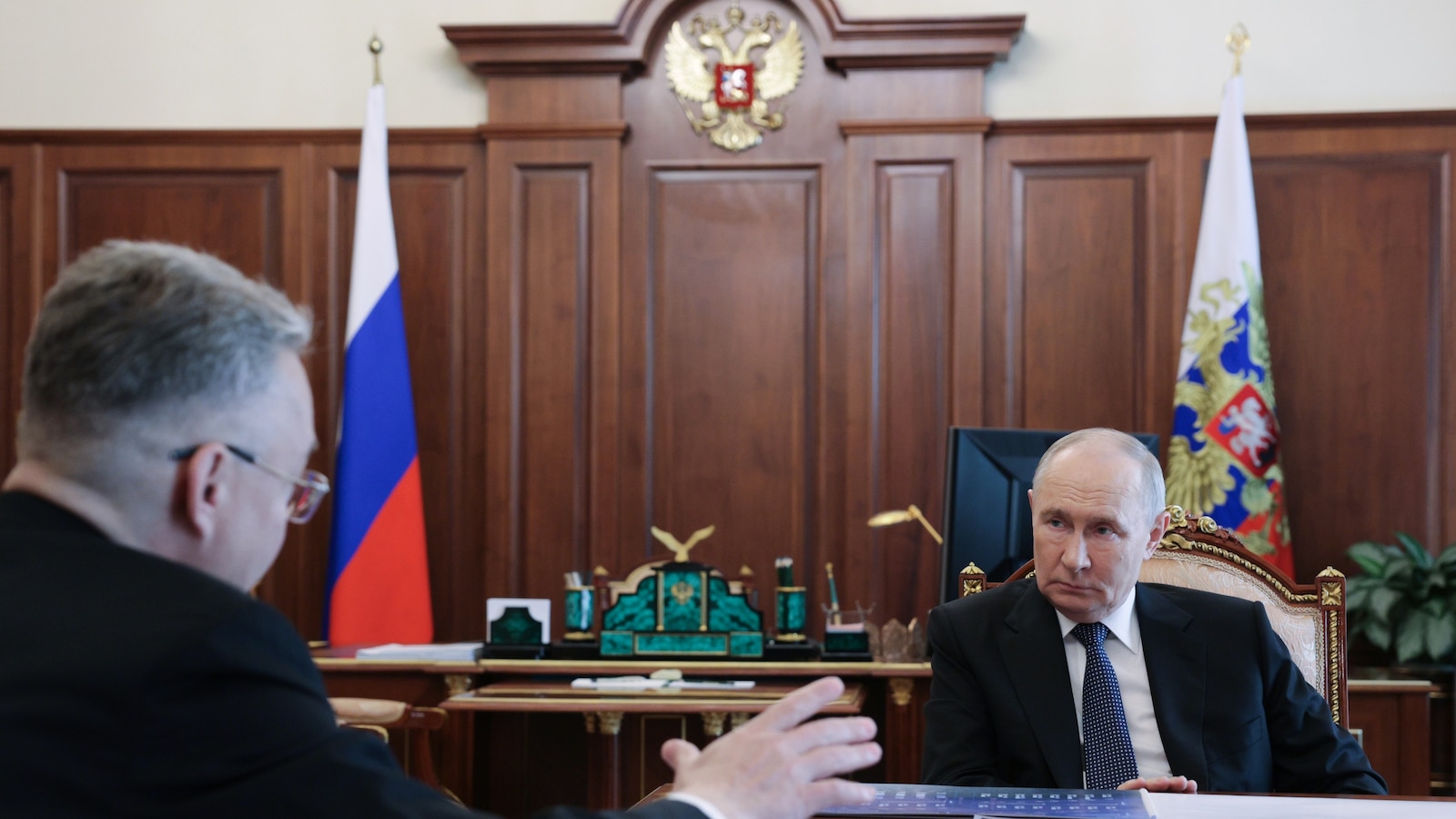
Russian President Vladimir Putin’s Decree: A New Era of State Control?
The recent escalation of Ukrainian drone attacks on Russian oil refineries and e-commerce hubs has led to significant economic pressure and public frustration in Russia. In response, Russian President Vladimir Putin has issued a decree that temporarily allows the state to seize control of critical infrastructure facilities if private owners fail to protect them from Ukrainian drone attacks or rebuild them after the strikes.
The Kremlin’s New Power Grab
The decree, which applies to various sectors including energy infrastructure, industrial facilities, communications, transportation, and logistics, has sparked concerns about the potential nationalization of companies and a change of ownership. However, Kremlin spokesman Dmitry Peskov has clarified that the decree does not imply the nationalization of companies or a change of ownership, but rather the involvement of the state in the management of an enterprise to solve specific security problems.
Deputy Prime Minister Denis Manturov has also stated that the decree does not imply widespread use, and that targeted, carefully considered decisions will be made at the highest level. He emphasized that the decree is aimed at addressing the pressing issue of air defense and ensuring the safety of critical infrastructure facilities.
Pressure on Business Owners
The decree is seen as a measure to pressure companies to shoulder more responsibility for air defense, given the vast territory of Russia and the difficulty in protecting it. Abbas Gallyamov, a Russian political analyst, has suggested that the measure might be a ‘tactical’ step designed to force the owners of repeatedly damaged oil refineries into making repairs. He noted that the government is giving companies an ultimatum: if they do not finance the restoration of the refineries, the state will take them over.
The move has significant implications for the Russian economy, particularly in the context of the ongoing war with Ukraine. The government has raised taxes and increased domestic borrowing to keep its budget deficit under control, and taking over major companies could potentially bring in revenue. However, seizing damaged assets could also bring another financial burden, and the Kremlin may need to weigh the pros and cons of this move.
Aid for Wildberries and Sellers
The Russian government has also offered more help for its biggest online retailer, Wildberries, and businesses selling goods through it. The company and thousands of sellers working with it have been hit hard by repeated Ukrainian strikes on warehouses. The Finance Ministry has proposed extending deadlines for tax and insurance payments to give Wildberries and its sellers some financial breathing space.
A New Era of State Control?
The decree has sparked debate about the potential implications of state control over critical infrastructure facilities. While some see it as a necessary measure to address the pressing issue of air defense, others are concerned about the potential for nationalization and a change of ownership. As the situation continues to unfold, one thing is clear: the Russian government is taking a more proactive approach to addressing the challenges posed by the ongoing war with Ukraine.


