Can Safeworld Make Generative AI Robots Safe Enough for Real‑World Deployment?
The robotics industry is rapidly embracing generative AI as the brain behind next‑generation humanoid and service robots. While this approach unlocks unprecedented flexibility and learning capability, it also introduces a fundamental challenge: the outputs of probabilistic models are far less predictable than those of traditional rule‑based algorithms. This unpredictability raises a pressing question for manufacturers and end‑users alike—how can we guarantee that a robot powered by a generative AI model will not cause harm when it operates alongside people?
The Birth of Safeworld
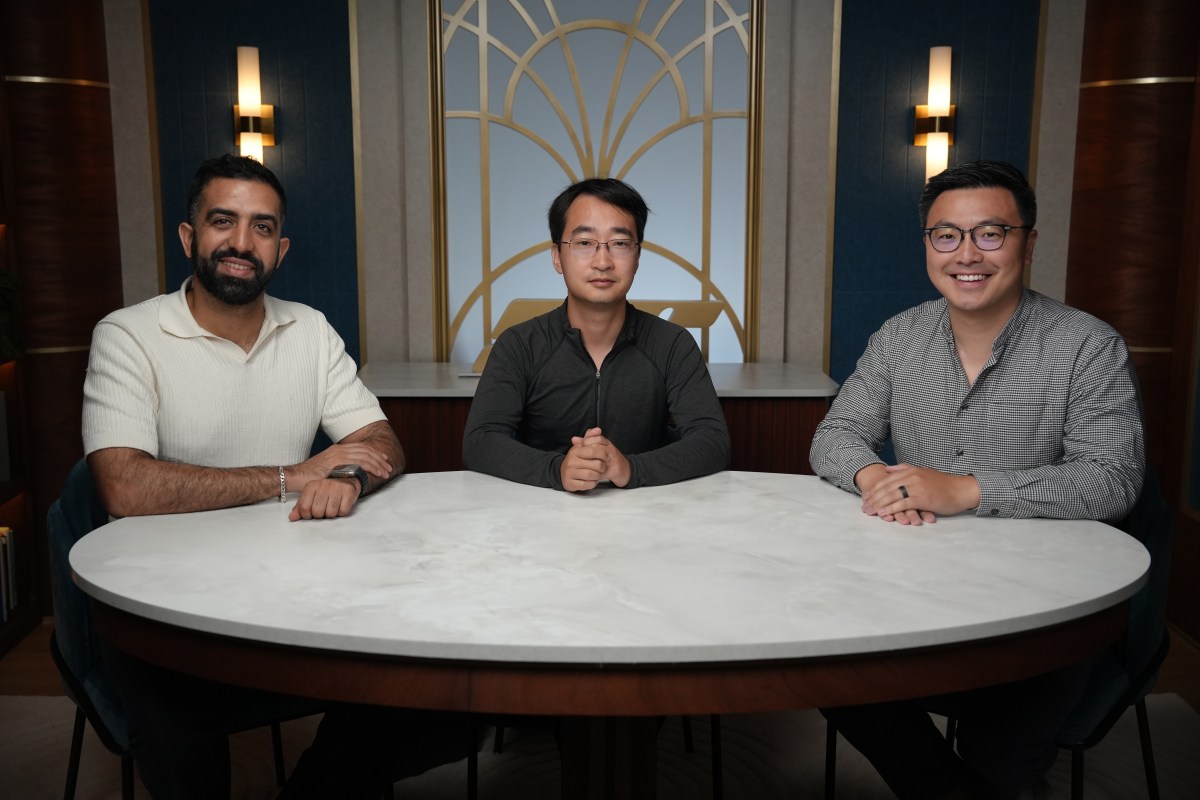
Dr. Ding Zhao, director of the Safe AI Lab at Carnegie Mellon University, has spent much of his career tackling exactly this problem. Together with veteran startup executive Kyle Wong and machine‑learning engineer Simo Rachidi, Zhao has launched Safeworld, a company dedicated to providing rigorous safety validation for AI‑driven robotic systems. The firm emerged from stealth today announcing a seed round of more than $12 million, led by Shine Capital and Andreessen Horowitz’s Speedrun fund, with additional participation from Box Group, the Carnegie Mellon University Endowment, Innovation Endeavors and SV Angel.
According to Zhao, the safety challenge comprises two intertwined components. First, there is the need to “underwrite the risk of a probabilistic system” through advanced generative AI probabilistic evaluations. Second, and perhaps harder, is establishing trust—demonstrating to regulators, customers and the public that the robot will behave safely in real‑world conditions. Both elements must be satisfied before any large‑scale deployment can be considered responsible.
How Safeworld Validates Safety
Safeworld’s core offering is a simulation‑based evaluation platform. The company constructs high‑fidelity digital twins of operational environments—such as a factory floor with blind corners—and populates them with realistic human models exhibiting a wide range of behaviors. The robot’s actual control software, driven by its generative AI brain, is then placed inside this virtual world and subjected to thousands of scenario runs.
As Kyle Wong explains, a typical test might ask: “What speed or stopping distance is required to ensure the robot will not collide with a human carrying boxes around a blind corner?” The simulation can also replicate less predictable events like tripping or falling, which would be impractical and unsafe to reproduce with real people.
Simo Rachidi adds that the difficulty lies in the inherent unpredictability of humans. “People are unpredictable,” he notes, “so we must explore a vast combinatorial space of poses, motions, attire and environmental factors to capture edge cases that might never appear in a controlled demo.”
Industry Parallels and the Need for Third‑Party Validation
The approach mirrors the validation pipelines used by autonomous vehicle developers such as Tesla and Wayve, which rely on simulation to stress‑test perception and planning modules against rare road incidents. However, Zhao argues that robotic safety is even more complex because robots operate in unstructured, semi‑public spaces where each facility may impose its own safety standards.
Safeworld founders believe that, despite having internal tools, robot makers will value an independent third party to validate their safety claims. Such an external assessment can also facilitate the sharing of safety cases across competitors, raising the overall safety baseline for the industry.
Early Partnerships and Future Vision
Vishal Dugar, CTO of Gritt Robotics—a firm building AI brains for robots that install photovoltaic panels on large‑scale solar farms—has already partnered with Safeworld. Dugar emphasizes that formal mathematical verification of safety is often infeasible for these systems; empirical testing via simulation is therefore essential. His robots must safely coexist with human workers who may be kneeling, standing, crouching, running or wearing varied clothing, all of which the simulation must account for.
Looking ahead, Safeworld is still refining its business model—deciding between a platform‑as‑a‑service offering for external users or a more hands‑on services‑based approach. The team remains confident that they are addressing a critical market need. As Zhao puts it, “We’ll probably be the first profitable company in this field, because if anyone wants to deploy, they need to pay us to handle the situation.”


