This Shark Can Live 400 Years: Its Eyes Barely Seem to Age
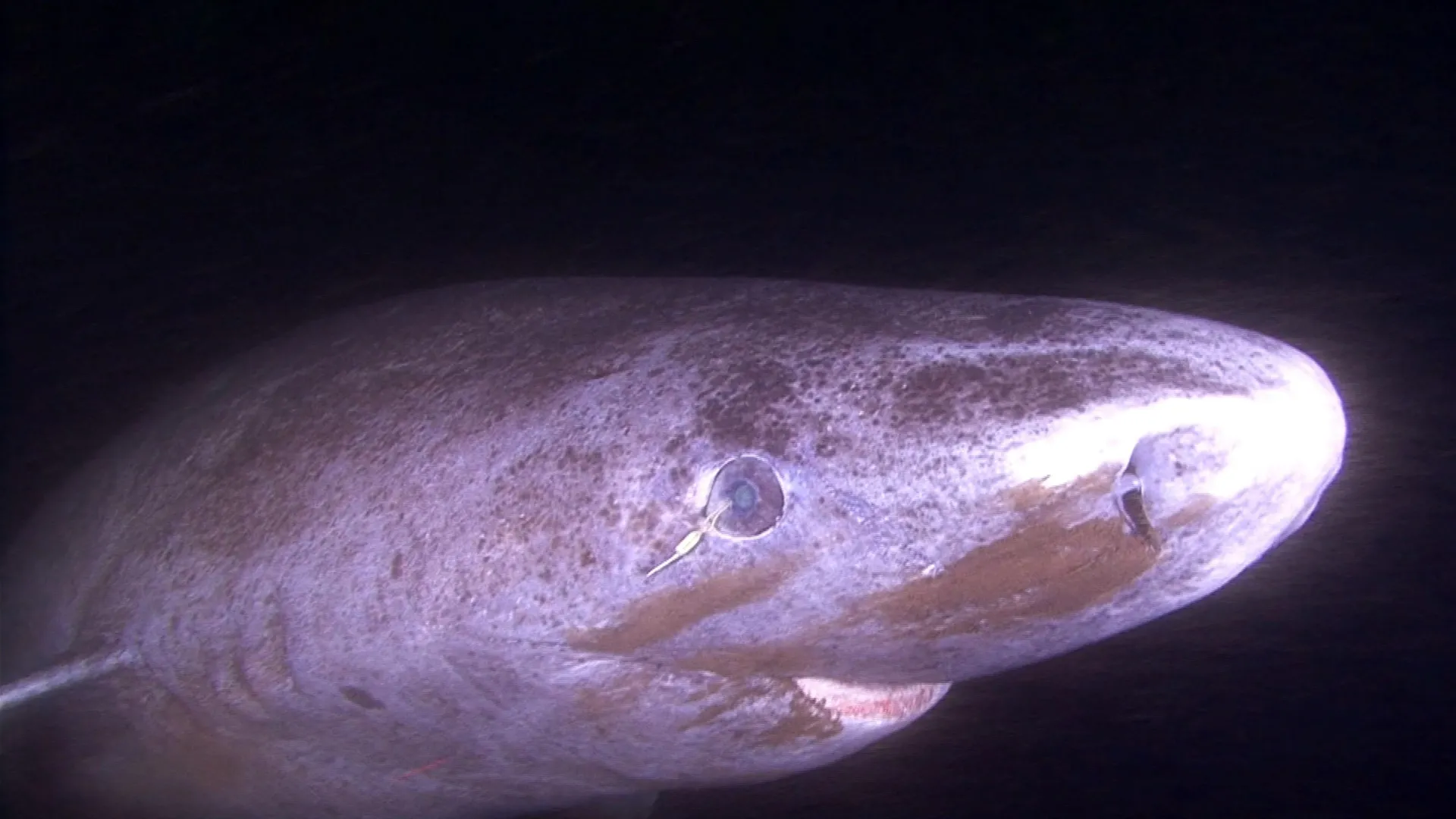
The Greenland shark is a mysterious creature that has long fascinated scientists. With a lifespan of up to 400 years, it’s one of the longest-living vertebrates known to science. But what’s truly remarkable about this shark is its ability to maintain its eyesight for centuries, despite living in extremely dark and murky waters.
Researchers at the University of California, Irvine, led by Associate Professor Dorota Skowronska-Krawczyk, have been studying the Greenland shark’s visual system to better understand how it adapts to its environment. Their findings, published in Nature Communications, suggest that the shark’s eyes are specially adapted to detect blue light, which is essential for vision in dim light conditions.
Skowronska-Krawczyk’s team used a combination of histological and vision-specific analyses to study the shark’s eyes. They found that the retina of the Greenland shark contains a protein called rhodopsin, which is essential for vision in dim light conditions. The protein was tuned to detect blue light, an adaptation that could help the shark see in the faint light available deep beneath Arctic waters.
The researchers also discovered that the Greenland shark’s visual system is highly resistant to damage, with no evidence of cell death in the retina. This suggests that the shark’s eyes are able to maintain their function for centuries, despite the harsh conditions it lives in.
Skowronska-Krawczyk’s interest in the Greenland shark’s visual system began after reading a 2016 research paper by John Fleng Steffensen, published in the journal Science. She was fascinated by the shark’s ability to move its eyeball towards light, which suggested that it was tracking the light and not just moving randomly.
The study’s findings have significant implications for our understanding of aging and longevity. They suggest that the Greenland shark’s remarkable lifespan is not necessarily linked to severe retinal deterioration, which is often associated with aging. Instead, the shark’s eyes appear to be specially adapted to maintain their function for centuries.
Skowronska-Krawczyk believes that understanding how the Greenland shark’s eyes remain healthy for centuries could eventually point researchers towards new strategies for preventing age-related vision loss. The findings could also help guide research into eye diseases such as macular degeneration and glaucoma.
Despite the importance of the study’s findings, Skowronska-Krawczyk is concerned about the future of research funding. She notes that uncertainty surrounding federal research funding has created concerns about future support for this type of work.
However, Skowronska-Krawczyk remains confident that her team’s work will continue to make a significant impact in the field. She says, ‘What I love about my work is that we are the first in the world to see results — at the forefront, finding new mechanisms, rules and discoveries.’
The study’s findings have sparked interest in the broader scientific community, with researchers from around the world reaching out to Skowronska-Krawczyk’s team to learn more about their work. The study’s implications are far-reaching, with potential applications in fields such as medicine, biotechnology, and materials science.
Skowronska-Krawczyk’s team is continuing to study the Greenland shark’s visual system, with a focus on understanding the molecular mechanisms that allow its eyes to remain healthy for centuries. They are also exploring the potential applications of their findings in the development of new treatments for age-related eye diseases.
As Skowronska-Krawczyk’s team continues to push the boundaries of our understanding of the Greenland shark’s visual system, they are also raising broader questions about how vision evolves, how tissues remain functional over extremely long periods, and whether some of those protective mechanisms could ultimately be applied to humans.
The study’s findings are a testament to the power of interdisciplinary research, with contributions from experts in physiology, biophysics, evolutionary biology, and vision science. The study’s implications are far-reaching, with potential applications in fields such as medicine, biotechnology, and materials science.


