US Government Lab Probes Chinese Lidar for Security Vulnerabilities
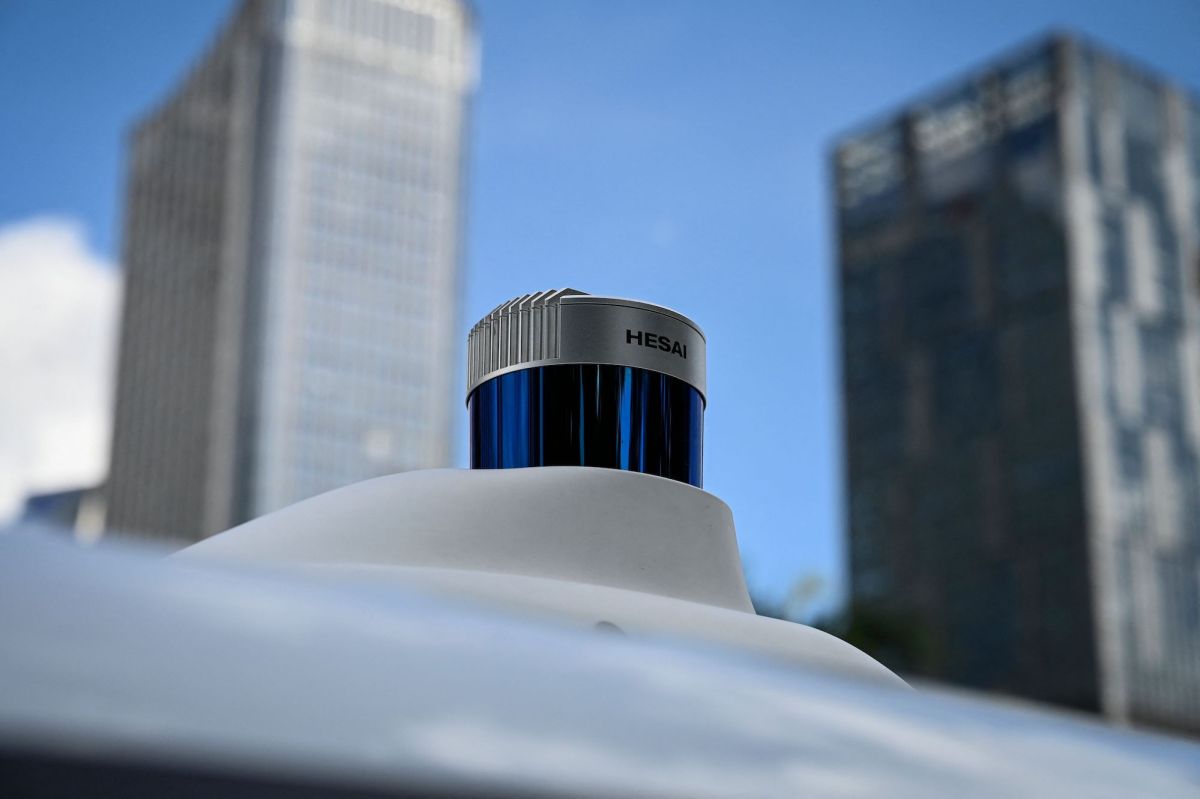
US Government Lab Investigates Chinese Lidar for Security Risks
The US Department of Energy’s Idaho National Laboratory is conducting a review to determine whether Chinese lidar sensors pose a security risk if they become widely used on vehicles in the United States.
The research is being funded by a company or group of companies in the electric and autonomous vehicle industries, according to sources familiar with the effort.
Concerns About Cybersecurity Risks
Cybersecurity experts have expressed concerns about the potential risks of using Chinese lidar sensors, particularly with regards to cybersecurity.
Omer Keilaf, CEO and co-founder of Israeli lidar company Innoviz, highlighted two major cybersecurity risks associated with Chinese lidar: the potential for widespread disruption of lidar sensors being actively used by robotaxis, and the possibility of compressing and transmitting finely detailed data about surroundings via a cellular chip.
Keilaf noted that researchers have shown in the past that individual lidar sensors can be disabled using lasers, but it’s unclear how China could cause a widespread disruption of lidar sensors being actively used by robotaxis.
He also emphasized that it’s possible to compress the finely detailed data collected by lidar sensors and transmit it via a cellular chip, which could be used to extract sensitive information.
Concerns About Supply Chain Risks
Keilaf also discussed the supply chain risks associated with using Chinese lidar sensors.
He noted that China’s government has deemed lidar to be a strategically important technology, which means that companies that use Chinese lidar sensors may be vulnerable to supply chain risks.
Keilaf emphasized that if an OEM builds its entire autonomous driving stack based on a Chinese supply chain, it could be a huge risk down the road.
Automakers Consider Using Chinese Lidar
Despite the concerns about security risks, several automakers and autonomous vehicle companies in the US are considering using Chinese lidar sensors as part of their autonomous vehicle sensor suites.
Rivian, which is planning to make a version of its new R2 SUV with a lidar sensor integrated into the roof, is reportedly one of those companies.
However, some companies are taking steps to mitigate the risks associated with using Chinese lidar sensors.
For example, Rivian’s CEO has stated that the company is considering making its own lidar sensors in the US by leveraging Chinese tech, possibly as part of a joint venture.
Regulatory Landscape
The regulatory landscape for the use of Chinese lidar sensors in the US is unclear.
The Department of Defense has placed both Hesai and RoboSense on its so-called 1260H list for allegedly supporting the People’s Liberation Army, which restricts their ability to work with the US military.
However, the Commerce Department’s rule prohibiting the use of Chinese-made connectivity hardware in US passenger cars does not apply to lidar and other autonomous vehicle sensors.
Lawmakers have expressed concerns about the potential risks associated with using Chinese lidar sensors, and have introduced bills to ban their use in the US.
Senator Tammy Baldwin, who is spearheading the Securing Infrastructure from Adversaries Act, has stated that she’s primarily concerned about Chinese lidar being used for military or industrial espionage.
She emphasized that the threat Chinese lidar technology poses to American communities and national security cannot be allowed to go unchecked.


